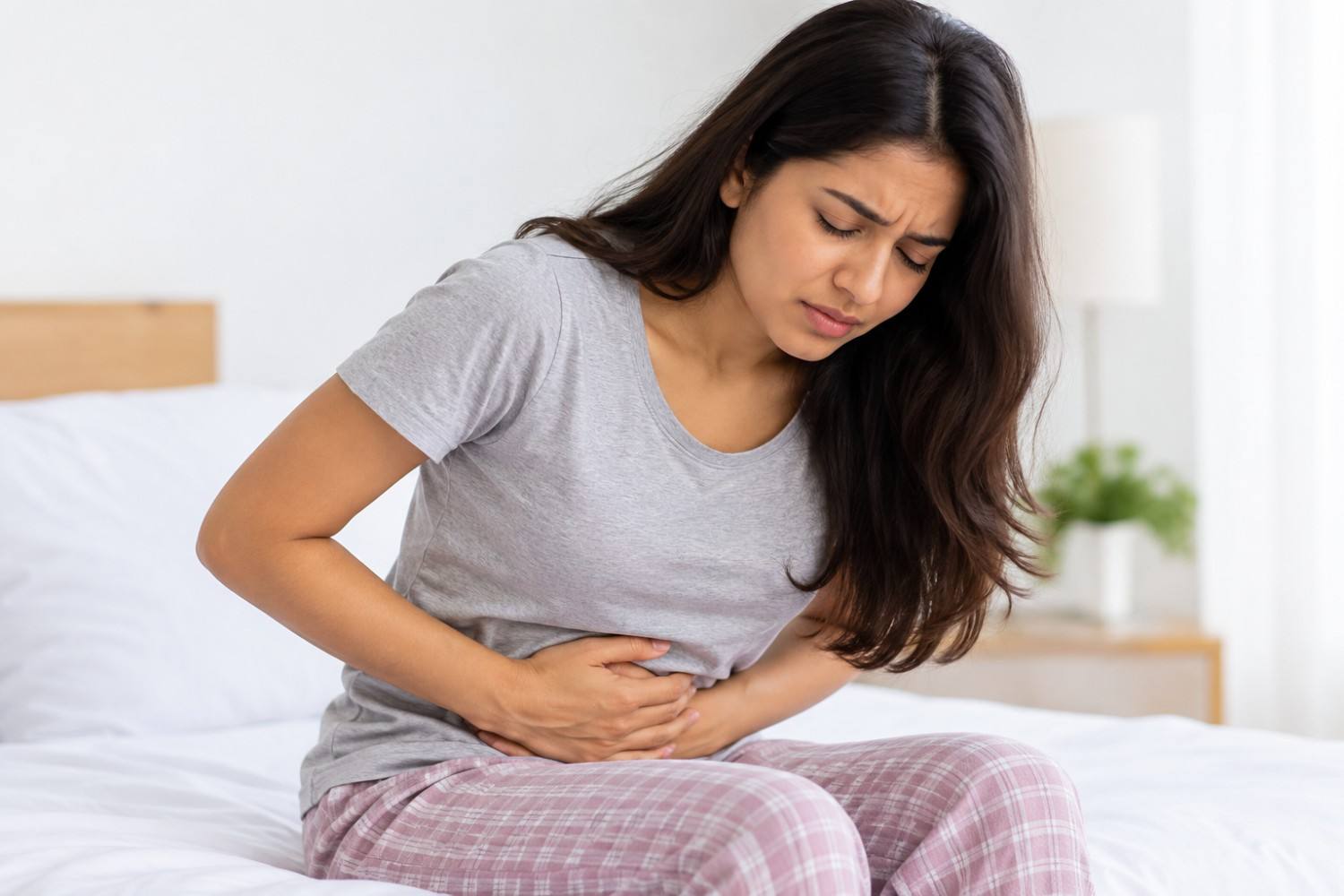
A growing number of women in India are being diagnosed with a painful lump near their Caesarean scar, years after delivery. This condition, known as scar endometriosis, occurs when endometrial-like tissue implants itself in the surgical scar during a C-section and grows there, causing pain and swelling that often gets worse around the time of the menstrual period.
As C-section rates in India continue to climb, well above what health authorities consider necessary, scar endometriosis is becoming a more frequent, and frequently misdiagnosed, problem. Understanding the link between the two can help women recognise the symptoms early and seek the right treatment.
What Is Scar Endometriosis?
Scar endometriosis (also called incisional or abdominal wall endometriosis) develops when endometrial cells are inadvertently transferred to the surgical incision during a C-section or other uterine surgery. Instead of being shed during menstruation as they normally would inside the uterus, these cells implant themselves within the scar tissue of the abdominal wall.
Once implanted, this tissue continues to respond to the hormonal changes of the menstrual cycle, thickening and bleeding in the same way the uterine lining does. Over months or years, this forms a firm, tender nodule at or near the C-section scar.
Why India’s High C-Section Rate Increases the Risk
India’s national C-section rate has risen sharply over the past decade. According to the National Family Health Survey (NFHS-5), roughly 1 in 5 births in India were by C-section, well above the 10-15% rate the World Health Organization considers medically ideal at a population level. More recent survey data suggests the national rate has since climbed even further, and in private hospitals in several states, C-sections now account for close to half of all deliveries.
This matters because every C-section carries a small but real risk of scar endometriosis. As the number of C-sections rises, the number of women exposed to this risk rises with it. A country performing far more C-sections than clinically necessary is, in effect, also creating more opportunities for this specific, lesser-known form of endometriosis to develop.
Factors That May Further Raise the Risk
- Multiple C-sections, which increase the number of times endometrial tissue can come into contact with the incision
- Larger uterine incisions or longer surgical time
- Underlying, previously undiagnosed endometriosis in the pelvis
- Variations in surgical technique, such as how the uterine cavity is protected during closure
Common Symptoms of Scar Endometriosis
Scar endometriosis has a fairly distinctive pattern that sets it apart from an ordinary scar problem:
- A firm, tender lump at or just beneath the C-section scar
- Pain and swelling that worsens around the time of your period
- A bluish, brownish, or dark discolouration of the lump
- Occasional bleeding or spotting from the scar during menstruation
- Gradual increase in the size of the lump over months or years
Why It’s Often Missed or Misdiagnosed
Scar endometriosis is frequently mistaken for more common post-surgical problems, which delays proper diagnosis and treatment. It is often initially diagnosed as a keloid or hypertrophic scar, an incisional hernia, a suture granuloma, or a simple abscess or cyst.
In India, this confusion is compounded by low general awareness of endometriosis itself, and by the fact that many women dismiss a lump near an old C-section scar as a cosmetic issue rather than something worth investigating. It is common for scar endometriosis to go unrecognised for two to five years after the original surgery.
How Scar Endometriosis Is Diagnosed
A clinical examination combined with a careful menstrual history is usually the first step, since the cyclical nature of the pain is a strong clue. This is typically followed by:
- Ultrasound of the scar nodule, which can show a solid mass with characteristic features
- MRI, when the lump is deep or the diagnosis is unclear
- Fine needle aspiration cytology (FNAC) in some cases, mainly to rule out other causes such as a tumour
Treatment Options
Surgical excision, removing the entire nodule with a margin of healthy surrounding tissue, is the definitive treatment for scar endometriosis and offers the best chance of avoiding recurrence. This is a procedure best performed by a surgeon experienced in endometriosis excision, since incomplete removal is the most common reason the lump returns.
Hormonal therapy can sometimes reduce pain and shrink the nodule temporarily, but it rarely resolves the problem on its own, and symptoms typically return once the medication is stopped. For most women, surgery remains the more reliable long-term solution.
Can Scar Endometriosis Be Prevented?
Careful surgical technique can lower the risk, including irrigating the incision thoroughly, changing instruments after the uterus is opened, and taking care to avoid direct contact between endometrial tissue and the abdominal wall during closure. That said, it cannot be entirely eliminated whenever a uterine incision is made.
At a population level, one of the most effective ways to reduce the overall burden of scar endometriosis is simply to reduce the number of medically unnecessary C-sections being performed.
When Should You See a Doctor?
Consult a gynaecologist if you notice any of the following, particularly if you have had a previous C-section:
- A new lump forming near your C-section scar
- Pain, swelling, or bleeding from the scar that follows your menstrual cycle
- A lump that is steadily increasing in size
- Discomfort that interferes with daily activities during your period
Scar endometriosis is uncommon, but as C-section rates in India continue to rise, it is a condition more women and their doctors need to be able to recognise. The cyclical, period-linked nature of the pain is the biggest clue, and it is one that is easy to miss if you are not looking for it.
If you have noticed a painful or growing lump near a C-section scar, Dr. Shinjini Pande, a Consultant Obstetrician, Gynaecologist, and Advanced Laparoscopic Surgeon in Mumbai, can help confirm the diagnosis and discuss the most appropriate treatment, including surgical excision when needed. Schedule a consultation to have your symptoms properly evaluated.
Frequently Asked Questions (FAQs)
1. How long after a C-section can scar endometriosis develop?
It can develop anywhere from a few months to several years after a C-section. Most cases are diagnosed within two to five years of the original surgery.
2. Is scar endometriosis cancerous?
No. Scar endometriosis is a benign condition. In extremely rare cases, malignant transformation has been reported, which is one reason doctors may recommend removing the nodule rather than leaving it in place.
3. Can scar endometriosis be treated without surgery?
Hormonal medication can sometimes ease symptoms temporarily, but it generally does not resolve the underlying nodule. Surgical excision offers the most reliable long-term result.
4. Does having multiple C-sections increase the risk?
Yes. Each additional C-section increases the number of opportunities for endometrial tissue to become implanted in the abdominal wall, which raises the overall risk.
5. Can scar endometriosis come back after removal?
Recurrence is uncommon when the nodule is completely excised with a margin of healthy tissue. The main cause of recurrence is incomplete removal during the original surgery.